AI-Powered Biodiversity Data for Conservation Professionals
AI-Powered Biodiversity Data for Conservation Professionals
biodiversity data platform, conservation data tool, species distribution mapping, AI biodiversity analysis, ecological impact assessment, protected species reporting, GIS biodiversity export, wildlife data management, ecological relationship mapping, environmental compliance software, gaia.eco
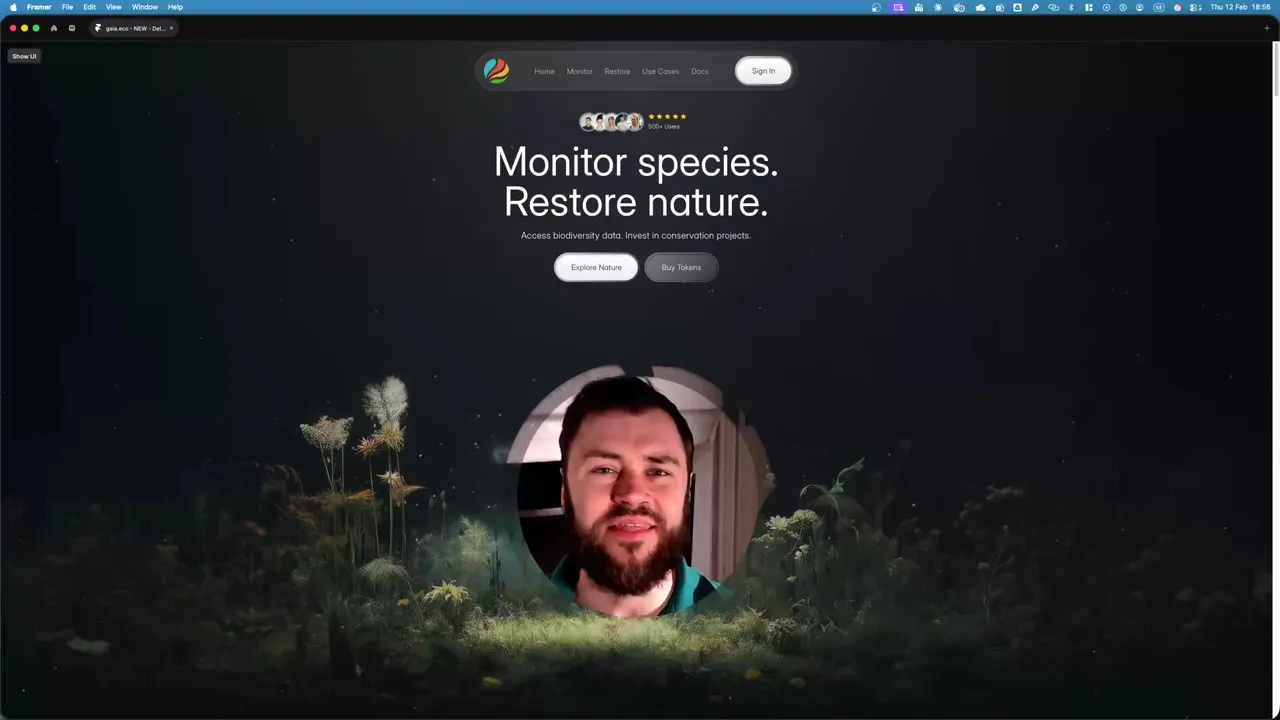
gaia.eco is a digital biodiversity data platform that functions as an interactive map for the natural world. The platform allows users to explore species distribution data overlaid on geographic maps, much like navigating Google Maps. It combines geospatial visualization, AI-driven analysis, and structured ecological data to support a wide range of conservation and environmental workflows.
The platform covers species-level detail including conservation status, temporal occurrence, taxonomic hierarchy, ecological relationships, and life-stage imagery. Data can be queried interactively through a built-in AI assistant or exported for use in external tools.
Use Case 1: Biodiversity Surveys and Site Assessments
Environmental consultants and ecologists conducting biodiversity surveys can use gaia.eco to quickly identify which species have been recorded in a given area. The platform returns species lists with associated conservation status, occurrence dates, and geographic coordinates — providing a strong evidence base before fieldwork begins.
Exported data can include over a thousand records per query, formatted for Excel or GIS software. This accelerates the desktop study phase of ecological impact assessments and habitat surveys.
Use Case 2: Conservation Status Reporting
gaia.eco flags protected species within search results, making it straightforward to determine which species in a project area carry legal protections. The AI assistant can summarize conservation insights on demand, and reports can be exported directly to Word for inclusion in compliance documentation.
This is particularly relevant for professionals preparing environmental impact assessments, habitat management plans, or regulatory submissions where species protection status must be documented.
Use Case 3: Species Identification and Taxonomy
The platform presents hierarchical taxonomic data — from species through to kingdom — alongside images covering different life stages and sexes. This supports accurate identification in the field or during desk-based review, especially for teams that may not have deep taxonomic expertise.
Users working on habitat restoration, ecological monitoring, or education programs benefit from having visual references and structured classification in a single interface.
Use Case 4: Ecological Relationship Mapping
gaia.eco integrates ecological interaction data sourced from peer-reviewed academic literature. Users can query predator-prey relationships, pollinator associations, parasite-host dynamics, co-occurrence patterns, and pathogen connections for any given species.
For example, querying the lynx returns its known ecological relationships, helping researchers or land managers understand trophic interactions and dependencies within an ecosystem. This feature supports conservation planning, rewilding assessments, and academic research.
Use Case 5: Sensitive Species Data Management
Location data within gaia.eco is subject to a deliberate spatial offset of 30–90 km. This protects sensitive species — particularly large or endangered wildlife — from poaching risks while still providing spatially useful information for planning and analysis.
This approach reflects an ethical data management model suited to organizations working with vulnerable species, where balancing transparency with protection is a priority.
Use Case 6: AI-Assisted Data Interpretation
The built-in AI assistant allows users to ask natural-language questions about the data returned by a search. It can summarize species lists, highlight conservation concerns, and provide ecological context without requiring the user to have specialist knowledge.
This lowers the barrier to entry for rangers, landscape architects, planners, and other professionals who need biodiversity information but may not have formal ecological training.
Use Case 7: Data Export for GIS and External Analysis
Raw data from gaia.eco can be exported in Excel format for general use, or in GIS-compatible formats under a professional subscription. Each export includes species names, coordinates (with offset applied), dates, and protection status.
This supports integration with existing GIS workflows, spatial analysis tools, and organizational databases — making gaia.eco a practical data source within broader environmental data pipelines.
Getting Started
Users can create a free account on gaia.eco and begin with complimentary weekly searches. Subscription tiers are available for users who need expanded query limits, enhanced export options, and GIS compatibility. The tiered model is designed to allow exploration before commitment, supporting adoption across individuals, teams, and organizations of varying scale.
Join our Community Forum
Any other questions? Get in touch