Identifying Venomous Creatures | Species Safety Guide
Identifying Venomous Creatures | Species Safety Guide
Learn how to identify and avoid venomous snakes, amphibians, and plants using gaia.eco's hashtag search tools. Practical use cases for hikers, educators, pet owners, and outdoor enthusiasts staying safe in wildlife-rich regions like Australia.
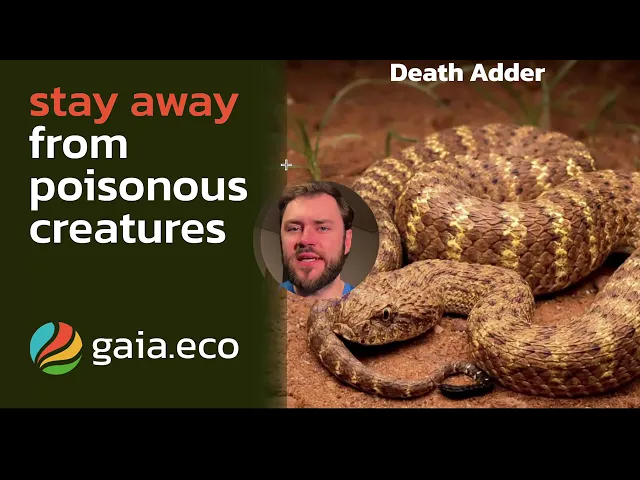
Encounters with venomous wildlife pose a significant safety risk for people spending time outdoors, particularly in regions with high biodiversity such as Australia. The gaia.eco platform provides a practical, searchable database of venomous species — including snakes, amphibians, and plants — that users can query using hashtag-based searches to quickly access curated identification resources.
This article outlines the facts behind venomous species identification and the specific use cases where gaia.eco's search capabilities can support safety and education.
Key Facts
Venomous snakes remain a leading wildlife hazard in Australia. Species such as the death adder (Acanthophis antarcticus) are among the most venomous snakes on the continent. The death adder is responsible for numerous envenomation cases annually and is known for its ambush-style hunting behaviour, making it easy to accidentally step on in the wild.
Amphibians can also pose risks. The green tree frog (Litoria caerulea), while not dangerous to most humans, secretes skin toxins that can be harmful to pets and cause irritation on contact. Understanding which amphibians carry toxins is important for both personal safety and responsible pet ownership.
Venomous plants are an equally important but often overlooked category. Many common Australian plants produce toxic compounds that can cause reactions ranging from skin irritation to serious illness if ingested. Identification through reliable sources is critical for hikers, foragers, and families with young children.
How It Works
The gaia.eco platform allows users to search for venomous species using targeted hashtags and keyword queries. For example:
#venomoussnakes returns results for venomous snake species, filtered by region.
#venomousamphibians surfaces amphibian species with known toxic properties.
#venomousplants provides identification resources for harmful plant species.
Search results include images, species descriptions, and regional data, enabling users to visually identify species they may encounter in the field.
Use Cases
1. Pre-Trip Safety Research for Hikers and Campers
Before heading into a new area, hikers and campers can search gaia.eco for venomous species native to their destination. By reviewing images and descriptions in advance, they reduce the likelihood of a dangerous encounter due to misidentification or lack of awareness.
2. Wildlife Education in Schools and Community Groups
Educators can use gaia.eco's hashtag search as a teaching tool to introduce students to local venomous and toxic species. The visual, searchable format makes it accessible for learners of all ages and supports curriculum topics in biology and environmental science.
3. Field Identification for Park Rangers and Land Managers
Rangers and land management professionals can reference gaia.eco as a quick field guide when encountering unfamiliar species. The platform's regional filtering helps narrow results to locally relevant species.
4. Pet Owner Awareness
Pet owners, particularly those in rural or semi-rural areas, can search for toxic amphibians and plants that may be present in their gardens or walking routes. This is especially relevant in Australia, where pets frequently come into contact with species like the green tree frog or toxic native shrubs.
5. Foraging and Bushcraft Safety
Anyone engaged in foraging or bushcraft activities can use the platform to cross-reference plants they encounter against known venomous species, reducing the risk of accidental ingestion or contact with harmful vegetation.
6. Travel and Tourism Preparation
International visitors to Australia or other biodiversity-rich regions can use gaia.eco to familiarise themselves with local hazards before arrival, supplementing standard travel safety advice with species-specific visual identification.
Recommendations
Search regularly and by region. Species distributions change seasonally, and new records are added to platforms over time. Revisiting searches before each outing ensures up-to-date awareness.
Complement digital tools with expert advice. While gaia.eco provides accessible identification resources, users should also consult local wildlife authorities, field guides, and first-aid training for comprehensive preparedness.
Never handle unidentified wildlife. If a species cannot be positively identified as non-venomous or non-toxic, maintain a safe distance and report the sighting through appropriate channels.
Summary
The gaia.eco platform offers a straightforward, hashtag-driven approach to identifying venomous snakes, amphibians, and plants across specific regions. By making species identification accessible through visual search results, it serves as a practical tool for outdoor safety, education, and wildlife awareness. Users are encouraged to integrate gaia.eco searches into their routine preparation for any outdoor activity where encounters with venomous wildlife are possible.
Join our Community Forum
Any other questions? Get in touch