Invasive Alien Species Monitoring
Invasive Alien Species Monitoring
Track and manage invasive species with Gaia.eco — a web map service for real-time biodiversity data collection, predictive modelling, and ecosystem protection.
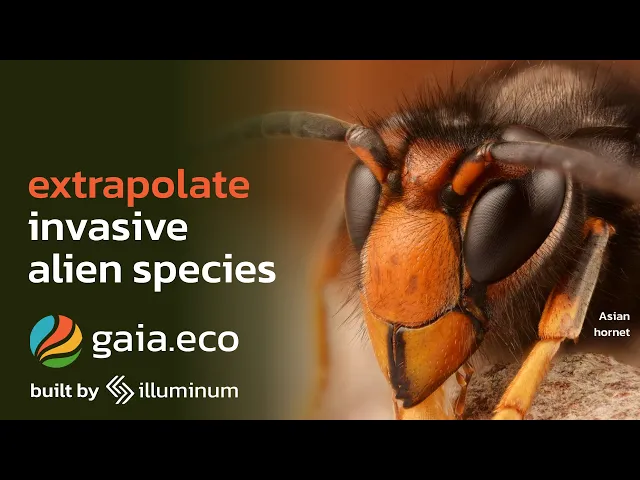
Invasive species pose a serious and growing threat to infrastructure, ecosystems, and food supply chains worldwide. Effective management depends on early detection, reliable data collection, and predictive modelling — capabilities that gaia.eco is purpose-built to deliver.
The Problem
Invasive species cause significant economic and ecological damage. Japanese knotweed alone costs the UK approximately £250 million per year through damage to buildings and roads. Meanwhile, the Asian hornet — now spreading across Europe — is killing native bee populations that are essential for pollination and agricultural productivity.
Left unchecked, these species expand rapidly and unpredictably. Traditional monitoring methods are often reactive, fragmented, and too slow to inform timely interventions.
How Gaia.eco Helps
gaia.eco is a web-based map service that enables on-demand biodiversity data collection. It gives environmental professionals, researchers, and policymakers the tools to track, visualise, and analyse the spread of invasive species in real time.
Use Case 1: Infrastructure Protection
Invasive plants like Japanese knotweed compromise the structural integrity of buildings, roads, and drainage systems. gaia.eco allows asset owners and local authorities to map known infestations, monitor their spread over time, and prioritise remediation efforts based on proximity to critical infrastructure.
Use Case 2: Pollinator and Ecosystem Defence
The Asian hornet is a direct threat to European bee populations and, by extension, the pollination services that underpin agriculture. gaia.eco supports the tracking of confirmed sightings and nest locations, helping beekeepers, conservation groups, and government agencies coordinate rapid response efforts.
Use Case 3: Predictive Spread Modelling
Knowing where an invasive species is today is only part of the picture. By integrating with extrapolation and modelling services, gaia.eco data can be used to forecast where species are likely to appear next — enabling stakeholders to move from reactive control to proactive prevention.
Use Case 4: Cross-Stakeholder Collaboration
Invasive species management requires coordination across landowners, researchers, government bodies, and conservation organisations. gaia.eco provides a shared data platform that breaks down silos, ensuring all parties work from the same up-to-date information.
Why It Matters
Economic impact: Invasive species cost billions globally each year in damage and control measures.
Food security: Threats to pollinators have direct consequences for crop yields and agricultural supply chains.
Biodiversity loss: Native species and habitats are displaced or destroyed by unchecked invasions.
Data-driven action: Timely, accurate field data is the foundation of every effective intervention strategy.
Getting Started
gaia.eco is available as a web map service and can be adopted by organisations of any size. To explore how it can support your invasive species monitoring or broader biodiversity goals, sign up for map.gaia.eco or get in touch with the team directly.
Join our Community Forum
Any other questions? Get in touch