Search
Taxonomy of the Tree of Life
gaia.eco resolves searches across the taxonomic hierarchy — from species to genus to kingdom. Query any taxonomic level to automatically aggregate biodiversity data, spatial distributions, and species records into a single result set.
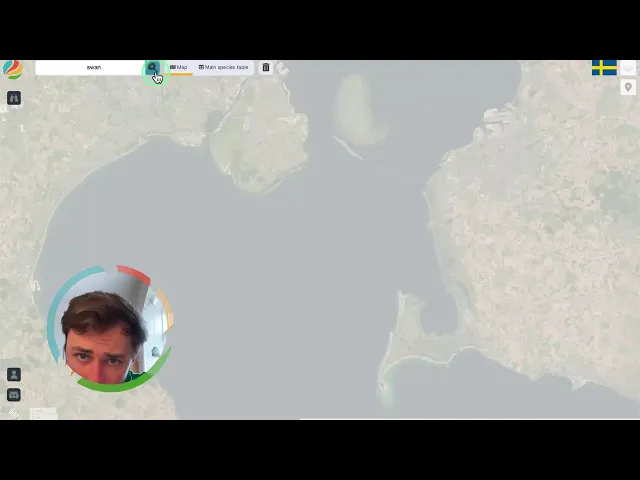
gaia.eco understands the hierarchy on the tree of life. This means searches can target a single species, a genus, or a broader taxonomic group like a kingdom — and gaia.eco will automatically resolve and aggregate the relevant taxa.
How It Works
When a user searches for a species name, gaia.eco matches the query against the taxonomic tree. If the query corresponds to a genus or higher-level group, gaia.eco returns data for all child species within that group.
For example, searching for "swan" returns data across all recognised swan species, such as for example whooper swan, mute swan, and tundra swan. A search for "whooper swan" returns data for that single species only.
This behaviour applies at every level of the taxonomic hierarchy. Querying a family name returns data for all genera and species within it; querying a genus returns all species within that genus.
Recommended Search Strategy
Start with a focused, species-level query before broadening to a genus or family. This approach has two advantages:
It keeps the initial result set manageable, making it easier to evaluate data quality and coverage for a known species faster.
It provides a baseline for comparison when the search is later expanded to include higer-level taxa.
Data Aggregation
gaia.eco aggregates data points from all resolved species into a single result set. In the swan example, a genus-level search combines records from three species into one unified dataset. Each record retains its species-level identification, so users can filter or group by individual species after retrieval.
Geographic Context
Species records in gaia.eco include geographic coordinates. This makes it possible to analyse spatial distributions at both the single-species and multi-species level, supporting use cases such as range mapping, regional biodiversity assessments, and migration pattern analysis.
Summary
gaia.eco's taxonomic resolution removes the need to manually search and combine results for each species in a group, simplifying biodiversity data exploration for researchers, analysts, and hobbyists alike.
Join our Community Forum
Any other questions? Get in touch