Search
Search Biotic Interactions - Gaia Nexus
gaia.eco retrieves ecological and biotic interaction data across the tree of life for any species. Explore predators, parasites, and prey relationships at multiple taxonomic levels from kingdom to genus.
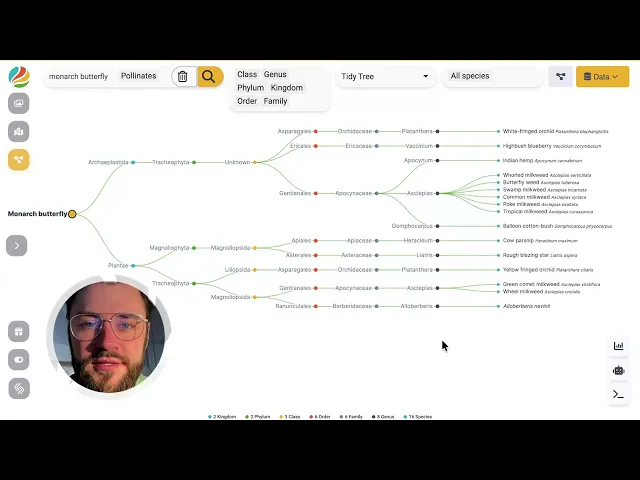
Nexus is a module within the Gaia that allows users to explore ecological relationships among species. It draws on a database of 20 million documented species connections, each backed by peer-reviewed academic research.
What Nexus Does
Nexus maps interactions between species across a range of ecological relationship types, including pollination, predation, co-occurrence, parasitism, and pathogen–host dynamics. Every relationship displayed in the module links back to its supporting academic source, providing transparency and traceability.
Data Structure
Species data in Nexus is organized using a standard taxonomic hierarchy — from kingdom down to individual species. Each connection between two species is expressed as a directional relationship with a defined source (the species initiating the interaction) and a target (the species receiving it).
Filtering and Search
Users can narrow the data displayed in Nexus by filtering on taxonomic rank, such as class or genus. This makes it possible to move between broad overviews and focused, species-level detail depending on the task at hand.
A dedicated species search function lets users look up a specific organism and view all of its documented ecological interactions. A "co-occurs with" option acts as a catch-all filter, surfacing every recorded relationship for a species regardless of interaction type. During searches, a real-time console provides status updates so users can follow the system's progress.
Species names are translated from Latin to common language where available, improving readability.
KPIs and Reporting
Nexus calculates key performance indicators (KPIs) based on species connections. These metrics can support ecological modelling, conservation assessments, and general reporting.
Data Export
All relationship data visible in Nexus can be downloaded in Excel format for use in external analysis tools, models, or documentation workflows.
Intended Audience
Nexus is designed for ecologists, environmental researchers, conservationists, and data analysts working with biodiversity data. It supports use cases ranging from ecological modelling and knowledge discovery to conservation planning and environmental reporting.
Join our Community Forum
Any other questions? Get in touch