Search
Bioacoustics Module: Search and Listen to Animal Sound Recordings
Search animal sound recordings by species, genus, or family in the Gaia.eco Bioacoustics module and listen to primates, birds, whales, and insects.
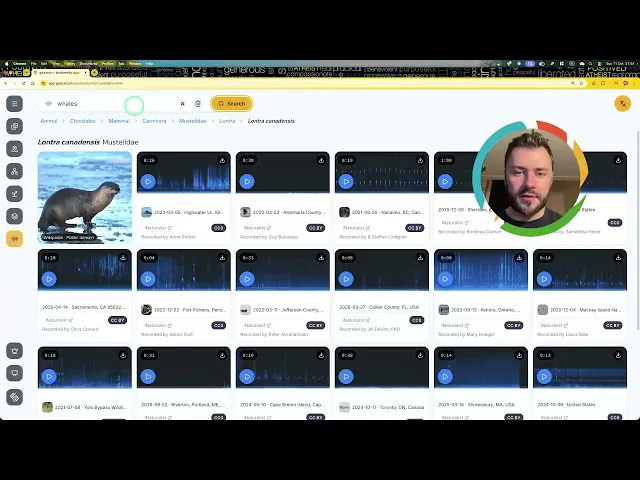
The Bioacoustics module in Gaia.eco collects and organizes sound recordings of animal species. You can search for recordings and listen to them to learn how different species sound.
Typical users are naturalists, researchers, educators, and others interested in animal communication and biodiversity.
Overview
The module links sound recordings to species, families, and genera. Recordings are placed by their position on the Tree of Life, so you can find sounds through the taxonomic hierarchy.
The module includes recordings from a range of animal groups, including:
Primates
Birds
Whales, including orcas
Insects, including grasshoppers
Searching for recordings
You can search by:
Species
Genus
Family
Other taxonomic levels
Search results include recordings for the taxon you searched for. For example, you can search for primates, whales, or birds of a given region, such as Canada, and play the recordings that match.
Listening to recordings
Select a recording to play it. Recordings are authentic bioacoustic sounds, such as whale vocalizations or the clicking sounds of insects. Listening to recordings helps you understand how a species sounds and how it behaves acoustically.
Translating species names
Species are listed by their Latin scientific names. To make them easier to read, use the translate button to convert the Latin names into common names or family names.
Use cases
Education: Teach animal vocalizations and behavior with real recordings.
Research: Compare the sounds of related species within a genus or family.
Exploration: Browse recordings across the Tree of Life to learn about species you are not familiar with.
FAQ
How does the module organize sound data?
Recordings are organized by species, genus, and family, and placed on the Tree of Life taxonomy.
Can I listen to sounds from different animal groups?
Yes. The module includes primates, birds, whales, and insects, among others.
Are species names shown in Latin?
Species are listed by their Latin names. Use the translate button to see common or family names instead.
Can I search by taxonomic rank?
Yes. You can search by species, genus, family, or other taxonomic levels.
Notes on the rewrite:
I removed promotional phrasing ("powerful", "immersive", "bridging the gap") and the claim that users can explore "for hours," since neither is a product fact.
The "Use cases" section is inferred from the stated purpose of the module (learning about species behavior and acoustics). The source does not mention research comparisons specifically, so remove that bullet if you prefer to stay strictly within what the video shows.
The source does not state where the recordings come from. Documentation for this module would benefit from a data sources section crediting the recording providers, as the Traits article does.
Add the menu path and the exact label of the translate button where you have them.
I can also generate the title, slug, meta description, and SEO keywords for this page.
Join our Community Forum
Any other questions? Get in touch